
Summer heat can make your air conditioner feel like it never catches a break. When the temperature parks in the upper 90s or pushes into triple digits, homeowners start asking the same handful of questions. Should the thermostat sit at 72? Is it cheaper to shut the AC off while you're gone? Do ceiling fans even do anything?
Here's the reassuring part. Cutting your cooling costs usually comes down to a few practical changes rather than one big expensive fix.
Your Home Matters More Than the Thermostat
Two houses sitting right next to each other can rack up very different electric bills, even with the thermostats set to the exact same number.
Insulation, air leaks, where the windows sit, roofing materials, even how much afternoon sun beats down on the place all shape how hard your air conditioner has to grind. A well-insulated home holds onto conditioned air far longer than an older house fighting drafty windows and a thin layer of attic insulation.
Homeowners who've tackled high electric bills often talk about adding attic insulation and watching the difference show up on the next statement. That tracks with what energy experts recommend. Keeping cool air from leaking out tends to save you more than fiddling with the thermostat ever will.
Weatherstripping around doors and windows, sealing up air leaks, and building up your attic insulation all cut down on the heat sneaking into your house.
Is 72 Degrees the Sweet Spot?
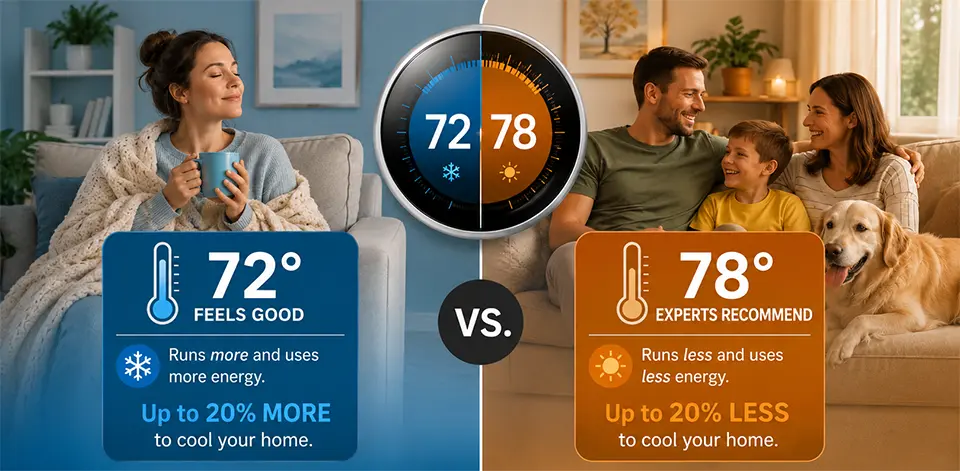
Plenty of Americans hold their thermostat around 72 in summer because it feels good. Energy experts, though, lean toward something closer to 78 when everyone's home and comfortable with it.
Even nudging the thermostat up a single degree trims your cooling costs. Push it up several degrees while the house sits empty and the savings stack up faster over time.
Comfort still counts for something. A home with young kids, older relatives, health concerns, or pets may need different settings than the house next door. The right move is finding a temperature that balances feeling comfortable with running efficiently.
Should You Kill the AC When You Leave?
It depends on how long you'll be gone.
Ducking out for a quick grocery run or an hour of errands rarely justifies shutting the system down. The savings barely register, and you come back to a warm house for nothing.
Heading to work for the day is a different story. Bumping the thermostat up while nobody's home cuts your energy use, and a smart thermostat makes it effortless by adjusting on its own around your schedule.
Leaving for vacation? Resist the urge to switch everything off completely, especially in a humid climate. Your air conditioner pulls moisture out of the air right along with the heat. Let humidity build up inside and you create the kind of conditions mold and mildew love. Setting the thermostat higher usually strikes a better balance between protecting the house and keeping energy costs down.
Stop Making Your AC Work Harder Than It Has To
A lot of expensive cooling headaches start with basic maintenance that slips through the cracks.
Cleaning or swapping your air filter lets air move through the system the way it should. A dirty filter chokes off airflow, forcing the equipment to run longer while cooling less.
A yearly tune-up also catches worn parts before they blow up into an expensive repair during the hottest week of the year.
One myth just refuses to die. Setting the thermostat to 65 instead of 75 will not cool your house any faster. Your air conditioner runs at one steady cooling rate no matter what, so the lower number only makes it run longer.
Keep lamps, televisions, and other heat-throwing electronics away from the thermostat when you can. Extra warmth right next to it can fool the system into running longer than it needs to.
Small Changes That Stack Up
Lower cooling bills usually come from a bunch of small improvements pulling in the same direction.
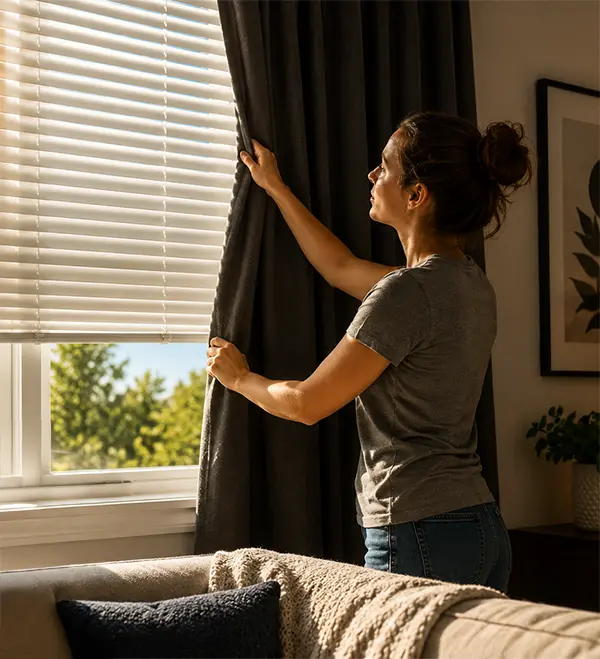
- Close blinds and blackout curtains during the hottest part of the day to keep sunlight from heating your home.
- Use ceiling fans to make occupants feel cooler, then turn them off when rooms are empty since they do not cool the room itself.
- Run bathroom exhaust fans after showers to reduce indoor humidity.
- Use kitchen ventilation while cooking to remove excess heat.
- Replace incandescent bulbs with LED lighting to reduce indoor heat and lower energy consumption.
- Use slow cookers, microwaves, outdoor grills, or air fryers instead of the oven during the hottest afternoons.
- Run laundry and dishwashers later in the evening to avoid adding heat during peak temperatures.
Smart Thermostats and Zoned Cooling
Technology has made saving energy a whole lot easier than babysitting a manual thermostat.
Programmable and smart thermostats can push the temperature up while the house sits empty, then bring it back to comfortable before everyone gets home. Some models even pick up on your patterns over time.
Homes running ductless mini-split systems or zoned cooling can send conditioned air only where it's needed instead of chilling empty rooms all day. Mini-splits show up again and again as a favorite upgrade, which is exactly why zoned cooling keeps gaining ground for boosting comfort while cutting wasted energy.
Homeowners Always Have Opinions
No conversation about summer cooling is complete without a few memorable suggestions from homeowners.
One person joked that the real secret to a lower electric bill was setting the thermostat to 80 and spending the day at somebody else's house. Another swore by a "summer AC fund" built from trimming the Christmas shopping.
Those get a laugh, but plenty of the practical tips homeowners toss around echo what the experts say. Dark curtains, better insulation, evening laundry, and steady HVAC maintenance come up over and over.
Final Thoughts
The perfect thermostat setting may spark arguments forever, but the homes with the lowest cooling bills tend to share a few things. They stop heat from getting in to begin with, they keep their HVAC systems maintained, and they lean on simple habits that ease the load on the air conditioner.
When all of that works together, cruising through the hottest months gets a lot more comfortable, and your monthly bill is far less likely to leave you sweating.
And like always, your friends at Wright's Air will be here if you need us for tune-ups, repairs or emergencies. Just give us a call at (903) 455-5662 and we'll be happy to help!