

When summer temperatures climb into the 90s, plenty of homeowners react by dropping the thermostat as low as it will go. The logic feels sound. A lower setting should cool the house faster and leave everyone more comfortable. Air conditioners are built to work within certain limits, though, and that's exactly where the 20-degree rule comes in.
The 20-degree rule is a well-known HVAC guideline that says you should keep your indoor temperature no more than 20°F below the outdoor temperature. When it's 95°F outside, a thermostat set to 75°F makes for a practical target. When the heat hits 100°F, an indoor setting around 80°F falls right in the recommended range.
A lot of people assume this rule is some kind of hard physical limit. It's really an efficiency benchmark. Most home air conditioning systems cool air just fine, but asking them to hold a gap much wider than 20 degrees usually forces the equipment to run nonstop, which drives up energy use and puts needless strain on the parts that matter.
Understanding How Your AC Cools Your Home
Air conditioners don't conjure cold air out of nowhere. They pull heat out of your indoor air and send the cooled air back into your living space. Most systems are designed to drop the temperature by roughly 16 to 22 degrees between the air coming in and the air leaving the supply vents. HVAC pros call this the temperature split, or Delta-T.
This is usually where the confusion starts. The 20-degree rule measures the difference between indoor and outdoor temperatures, while Delta-T measures the difference between return air and supply air inside the system. Two separate numbers doing two separate jobs.
What Happens When the Thermostat Is Set Too Low?
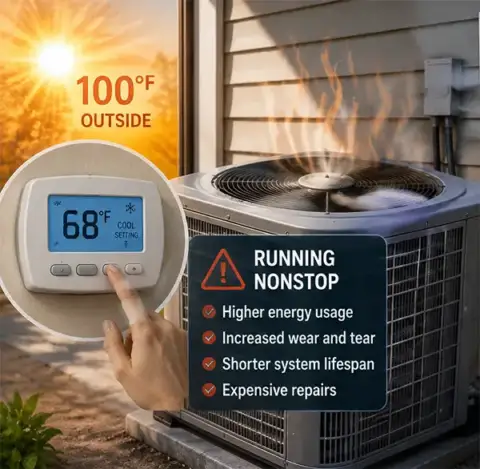
On a brutally hot day, setting the thermostat well below the recommended range can leave your air conditioner running almost nonstop. All that continuous operation pushes up your electrical usage and can send utility bills climbing fast. It also wears down motors, compressors, and other components that cost a fortune to repair or replace.
An overworked system tends to fall behind on humidity too. Most homeowners fixate on temperature, but humidity has a huge say in how comfortable a room feels. When indoor moisture rises, the house feels warmer even if the thermostat reading looks perfectly reasonable. A system stretched past its limits won't pull moisture out as well, and you end up with that sticky, clammy feeling indoors.
Why Following the 20-Degree Rule Makes Sense
Keeping the thermostat inside the recommended range pays off in a few clear ways:
- Lower monthly energy costs
- Less wear and tear on your HVAC equipment
- Better reliability when a heat wave rolls in
- A longer lifespan for your system
- More consistent comfort throughout the home
Many energy experts point to a summer setting near 78°F when you're home. That number tends to strike a good balance between staying cool and keeping costs down, especially once you pair it with a few other cooling tricks.
Simple Ways to Feel Cooler Without Lowering the Thermostat
One of the easiest ways to feel more comfortable is running your ceiling fans. A fan won't lower the room's temperature, but the moving air creates a wind-chill effect that makes you feel cooler. That lets you nudge the thermostat up a touch without giving up any comfort.
Blocking direct sunlight works well too. Closing blinds, shades, or thermal curtains during the hottest part of the day cuts down on solar heat gain and helps the house hold a comfortable temperature.
Heat-producing appliances add to the problem more than you'd expect. Ovens, stovetops, dishwashers, and dryers all throw off serious heat. Running them in the evening or early morning takes a real load off your air conditioner.
If you live somewhere humid, a dehumidifier can be a smart addition. Lower humidity often makes a room feel noticeably cooler, which means you can keep the thermostat at a more efficient setting.
Signs Your Air Conditioner May Be Overworked
If your cooling system is fighting to keep up when it gets hot out, watch for the signs that it's under too much strain:
- Constant or unusually long run cycles
- Rising utility bills
- Uneven temperatures from room to room
- Excess indoor humidity
- Strange noises like rattling, buzzing, or grinding
- Warm air coming from the supply vents
Any of these can point to a maintenance issue, restricted airflow, a refrigerant problem, or aging equipment that needs a professional's attention.
Final Thoughts
Even a well-cared-for air conditioner needs a repair or adjustment now and then. If your system can't hold a comfortable temperature, leaks water, makes unusual sounds, or suddenly loses performance, a professional HVAC inspection by Wright's Air can track down the cause before it turns into a bigger bill. Regular maintenance is still one of the best ways to get the most efficiency and the longest life out of your equipment.
The 20-degree rule isn't about cutting your comfort short. It's about understanding how air conditioners are built to operate. Keep your thermostat settings realistic, back up your system with smart cooling habits, and you can ride out the hottest days of summer in comfort while protecting your equipment and keeping your energy costs in check.
Give us a call today at (903) 455-5662 and we'll make sure your HVAC is in good health, and running at optimum efficiency!