
In North Texas, winter doesn’t always arrive with months of snow. But, like we saw last month, a single sharp freeze can still wreck a home. When water freezes inside your pipes, it doesn’t just block the flow. It expands with enough force to rupture the pipe completely. That leads to leaks, flooding, ruined flooring, and repair bills that stack up fast.
For homeowners in Greenville and the surrounding area, winter pipe prep isn’t just for the Northeast. It’s smart home maintenance right here at home.
Every winter, burst pipe claims pour in across the country. State Farm alone reported more than 17,000 frozen pipe-related claims in a single year, totaling more than $432 million in damage. Those kinds of numbers don’t just come from snowbound states. The real danger lies in homes that aren’t expecting to freeze, where pipes are left exposed, uninsulated, or forgotten during a cold snap.
Let’s walk through what happens when pipes freeze, how to recognize trouble, and the steps you can take right now to avoid a costly plumbing disaster this winter.
Why Frozen Pipes Cause So Much Damage
When temperatures fall, water inside your plumbing system begins to freeze. As it turns to ice, it expands, building pressure inside the pipe walls. If the pressure has nowhere to go, the pipe cracks or bursts. Once the temperature rises and the ice thaws, water floods out of that break. Sometimes this happens in hidden areas of your home, soaking insulation, drywall, furniture, and flooring.
Homes in Texas often have less insulation around plumbing because the region isn’t known for harsh winters. That makes unexpected cold snaps even more dangerous, especially if a homeowner turns down the heat to save money or leaves town without preparing the plumbing.
Spot the Signs Before Pipes Burst
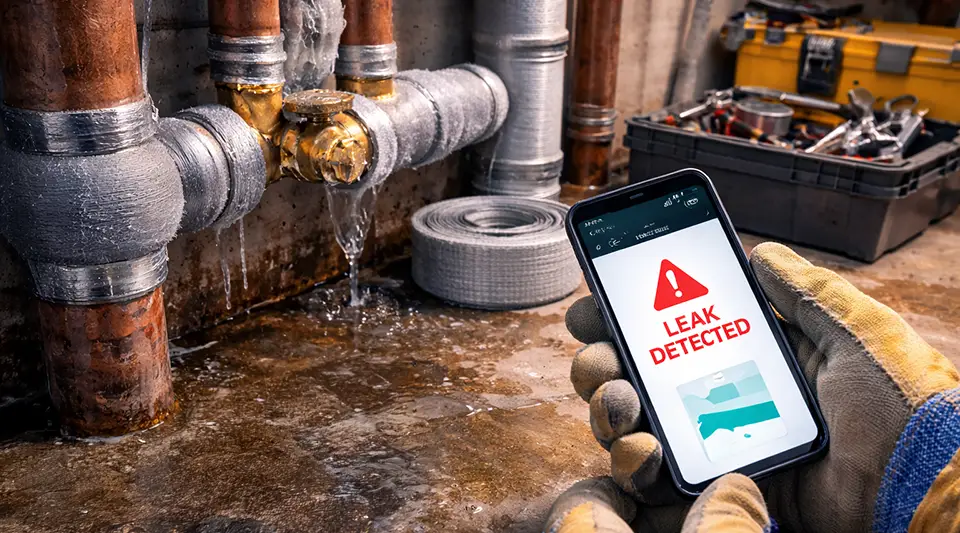
A frozen pipe doesn’t always explode the moment the ice forms. Often, there’s a short window where you can catch the issue early and take action. Here’s what to look for:
- Weak water flow or no water coming from a faucet: This may be a sign of blockage caused by ice buildup.
- Frost on exposed pipes: Especially in garages or crawl spaces.
- Unusual smells from drains: May indicate a frozen trap.
- Cold spots on walls or flooring: Near plumbing lines, these spots may indicate trouble behind the surface.
- Popping, whistling, or cracking noises: These may signal that pipes are under pressure from freezing water.
If water slows or stops suddenly during a cold night, there’s a good chance a pipe is frozen. Waiting to act could turn a minor inconvenience into a flooded living room.
Prevent Freezing Inside Your Home
Protecting pipes starts with keeping warm air circulating and cold air sealed out. It’s often the little things that make the biggest difference.
Leave cabinet doors open beneath sinks in kitchens and bathrooms, especially on exterior walls. This allows warm air from your home to reach the plumbing tucked inside those boxed-in spaces. At night or during especially cold days, let a slow trickle of cold water run from faucets connected to vulnerable pipes. That gentle flow keeps pressure low and helps prevent freezing.
Never set your thermostat lower than 55°F in winter, even if you’re leaving town. A little extra heat is far cheaper than replacing flooring or repairing ceilings. Maintain a consistent indoor temperature day and night. If your home’s garage has water lines running through it, keep the garage door closed as often as possible.
Insulate Exposed or Vulnerable Pipes
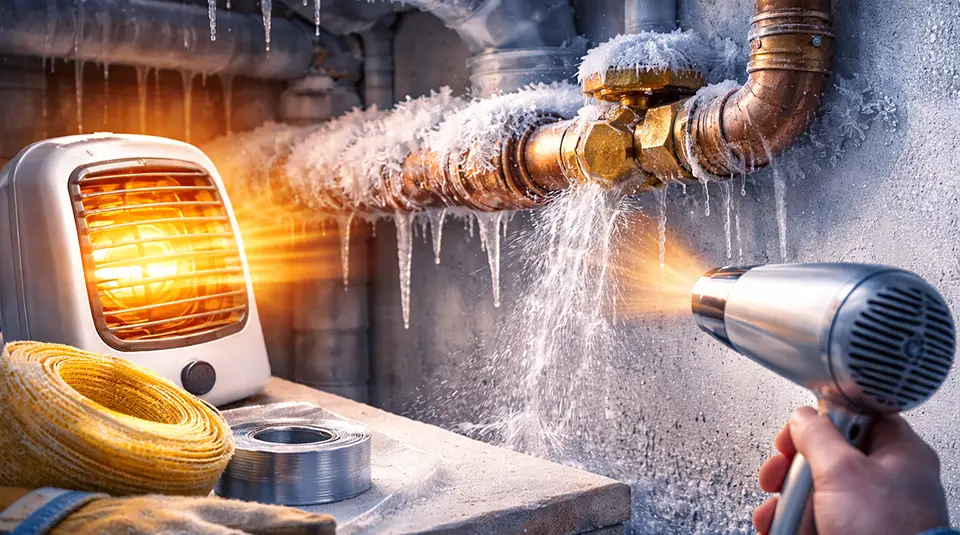
Insulation is one of the best defenses against freezing, and it’s both affordable and easy to install. Pipe insulation sleeves, heat tape, and fiberglass wraps can all help keep your pipes warm enough to prevent ice buildup.
Add insulation around any vulnerable pipes, and replace old or deteriorated wrap before the first freeze. If you’re using heating tape, make sure it’s UL-listed and follow the manufacturer’s safety instructions carefully.
Also consider sealing any gaps or holes where cold air might leak in around your plumbing. These are commonly found near window frames, doors, crawl space vents, and where pipes enter the home. A little spray foam or caulk can keep frigid air from sneaking in.
What to Do if a Pipe Freezes
If you wake up to no water or suspect a frozen pipe, don’t panic, but do act quickly.
- Shut off the main water supply: Know the location before emergencies occur.
- Turn off electricity if needed: If water is near outlets or appliances, shut power off for safety.
- Open remaining faucets: This helps drain the system and reduce pressure.
- Document damage: Take photos and notes for insurance purposes.
- Call your plumber and insurance provider: Quick action helps limit repair costs.
Final Thoughts
Cold snaps in Texas might be short-lived, but the damage they leave behind can take weeks or months to fix. Preparing your home now is the smartest, easiest way to avoid a major plumbing disaster when temperatures drop.
If you’re unsure where to start, or if you want a professional set of eyes on your system, contact us today at (903) 455-5662. We’ll help you get ahead of winter and protect your home, your wallet, and your peace of mind.